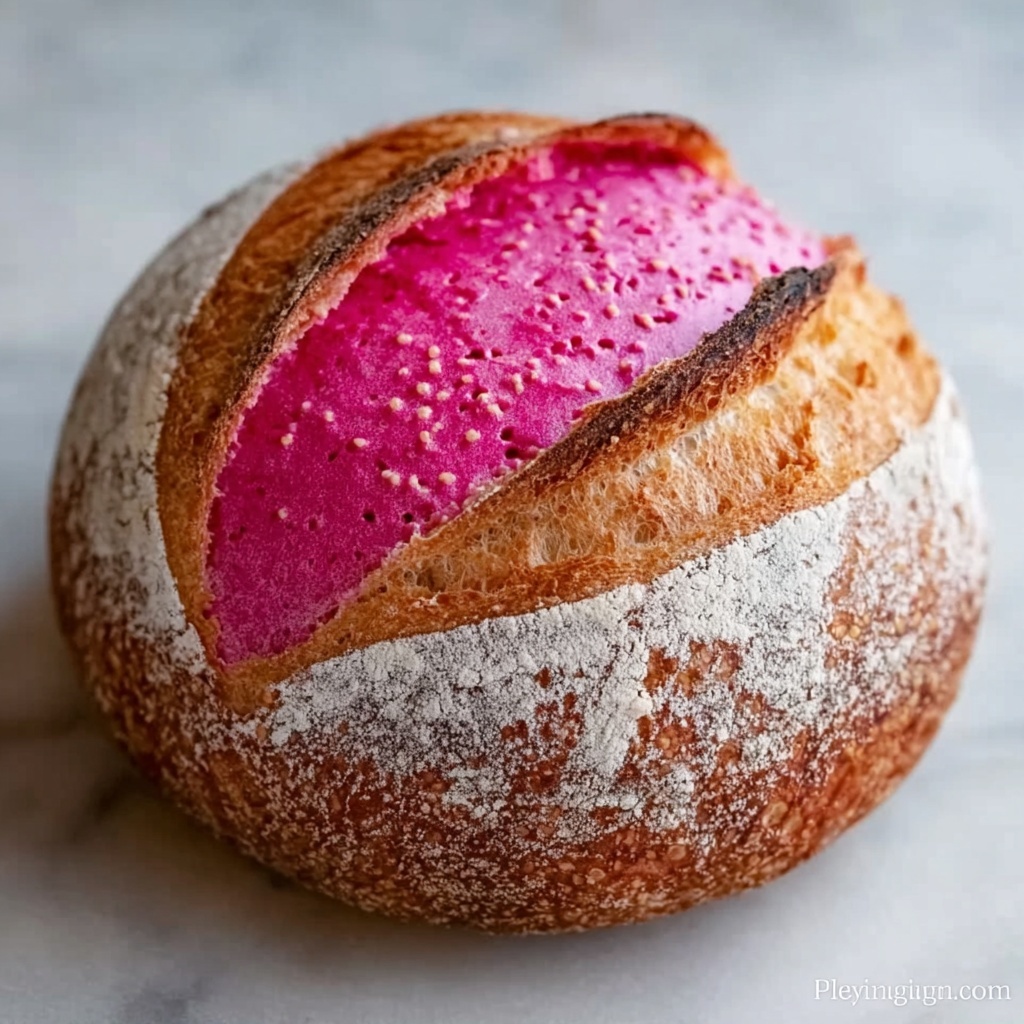
If you have been on the lookout for a bread recipe that feels both extraordinary and inviting, the Pink Sourdough Bread Recipe is exactly what your kitchen needs. Infused with the vibrant hue and subtle sweetness of dragon fruit powder, this loaf stands out with its beautiful color, tangy flavor, and delightfully chewy texture. It’s perfect for adding a splash of joy to your meals while still embracing the classic comforts of sourdough bread. The Pink Sourdough Bread Recipe is a fun baking project that brings a stunning visual and tasty twist to your everyday bread routine.
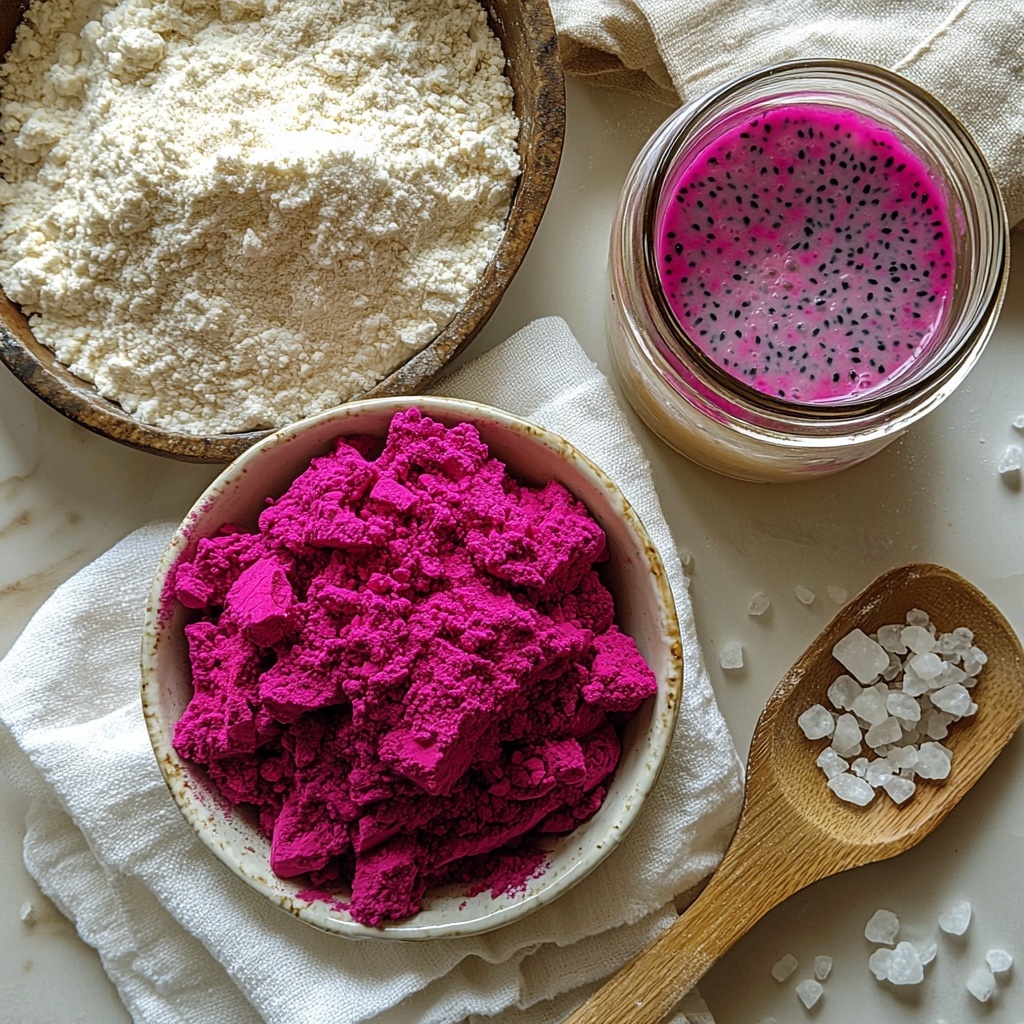
Ingredients You’ll Need
Using just a handful of straightforward ingredients, this recipe creates a bread that’s as impressive in flavor as it is in color. Each component plays a crucial role in building the dough’s structure and giving the bread its character.
- Dragon fruit powder: This is the secret ingredient that gives the bread the gorgeous pink hue and a subtle fruity note.
- Bread flour: Provides the structure and chewiness essential to a perfect sourdough loaf.
- Salt: Enhances the flavor and helps control fermentation for an even rise.
- Water: Hydrates the dough for that tender crumb and helps activate the yeast.
- Active sourdough starter: The heart of the bread, contributing its unique tang and natural leavening power.
How to Make Pink Sourdough Bread Recipe
Step 1: Prepare Your Starter
Begin by feeding your sourdough starter the night before. It’s essential to have an active, bubbly starter to achieve the right rise and develop the rich flavors characteristic of this Pink Sourdough Bread Recipe.
Step 2: Mix Dry Ingredients
Combine the bread flour, salt, and dragon fruit powder in a large bowl. Whisking these ingredients ensures even distribution of the pink powder and seasoning throughout your dough.
Step 3: Whisk Wet Ingredients
In a separate bowl, mix the water and the active sourdough starter. This blend is where the magic begins—hydrating your yeast and creating the base for fermentation.
Step 4: Combine Wet and Dry
Pour the wet mixture into the dry ingredients, stirring with a spatula just until a rough, shaggy mass forms. Resist the urge to over-mix; this stage is all about gathering the ingredients together.
Step 5: First Rest
Cover your dough and let it rest for 30 minutes. This step, known as autolyse, allows the flour to hydrate fully, which improves gluten development later on.
Step 6: Stretch and Fold
Stretch one side of the dough about six inches upward, then fold it back over the dough ball. Rotate the bowl and repeat until all sides get attention, shaping a tighter ball. This movement strengthens the dough’s gluten network.
Step 7: Second Rest
Cover and let your dough rest again for another 20-30 minutes to relax and continue fermenting.
Step 8: Repeat Stretch and Folds
Perform two more sets of the stretch and fold routine, each spaced 20-30 minutes apart. This gradual technique develops a strong dough structure ready for a wonderful rise.
Step 9: Bulk Fermentation
Cover the dough and allow it to bulk ferment at room temperature for 5 to 7 hours. You’ll know it’s ready when it has expanded by about 50%, pulls away from the bowl easily, and sports a slightly domed surface with a few bubbles.
Step 10: Shape the Dough
Turn the dough onto a floured surface, fold the edges toward the center, then flip it over and gently spin to create surface tension. This shaping method prepares your loaf for a strong final rise.
Step 11: Cold Proof
Transfer the shaped dough to a banneton and refrigerate for an hour. This cold proofing tones down fermentation, enhancing flavor while helping with final shaping.
Step 12: Preheat and Prep for Baking
Preheat your oven to 425 degrees Fahrenheit. Place the dough on parchment and dust it with rice flour. The rice flour helps to prevent sticking and adds a lovely finish to your crust.
Step 13: Score and Bake
Use a sharp razor to score the dough’s surface, allowing controlled expansion in the oven. Bake the loaf in a Dutch oven with the lid on for 25 minutes to trap steam, which encourages a crispy crust.
Step 14: Finish Baking
Remove the lid and continue baking for 22 to 25 minutes until the crust turns a beautiful, light brown. The pink hues from the dragon fruit powder will shine through the scoring.
Step 15: Cool and Slice
Let your gorgeous loaf cool for 1 to 2 hours before slicing. Cooling finishes the baking process internally and helps set the crumb so slices hold beautifully.
How to Serve Pink Sourdough Bread Recipe
Garnishes
To highlight that lovely pink color, a brush of melted butter with a sprinkle of coarse sea salt or a light drizzle of honey is divine. You can also add some edible flower petals for a whimsical touch that guests will adore.
Side Dishes
This bread pairs wonderfully with creamy cheeses like brie or goat cheese, fresh avocado spreads, or a tangy tomato chutney. It also makes a standout base for vibrant sandwiches or alongside soups and stews for a colorful twist.
Creative Ways to Present
Slice the Pink Sourdough Bread Recipe thick and toast it lightly to bring out the flavors, then top with smashed peas and radishes for breakfast or a light lunch. Alternatively, cube it and use in a salad or bread pudding to showcase those pretty pink swirls.
Make Ahead and Storage
Storing Leftovers
Once cooled completely, wrap your bread in a clean kitchen towel and store it in a bread box or paper bag to maintain its crustiness while keeping the interior moist. Avoid plastic bags, as they can make the crust soggy.
Freezing
If you bake ahead or have leftovers, slice the bread and freeze it in an airtight bag. This method locks in freshness and lets you enjoy your Pink Sourdough Bread Recipe any time without losing its delightful texture.
Reheating
To refresh frozen slices, toast them directly from the freezer or warm whole loaves in a preheated 350 degrees Fahrenheit oven for 10-15 minutes. This brings back the crust’s crispness and the bread’s soft inside charm.
FAQs
Can I use another type of fruit powder instead of dragon fruit?
Absolutely! While dragon fruit powder gives that iconic pink tone and subtle sweetness, you can experiment with other natural fruit powders like beetroot or raspberry for varying colors and flavors. Just keep in mind the flavor intensity and moisture content when swapping ingredients.
How important is the hydration level in this Pink Sourdough Bread Recipe?
Hydration is key to developing the bread’s crumb and texture. The 350 grams of water to 500 grams of flour strikes a balance that keeps the dough manageable while resulting in an open, tender crumb. Too little water can make it dense, while too much could cause difficulties shaping the dough.
What if my sourdough starter isn’t very active?
For the best results, your starter should be lively and bubbly, as it drives fermentation and flavor. If it’s sluggish, feed it a few times over a day or two before baking. Otherwise, your dough may not rise well or develop the signature tang.
Can I bake this Pink Sourdough Bread Recipe without a Dutch oven?
You can, but a Dutch oven traps steam that’s essential for a crackly crust and proper oven spring. If you don’t have one, place a tray of water on the oven bottom to generate steam and use a heavy baking sheet or covered pot as a substitute.
How long does this bread stay fresh once baked?
Freshly baked, your Pink Sourdough Bread Recipe will remain delicious for about 2 to 3 days when stored properly at room temperature. Beyond that, it’s best toasted or repurposed to avoid staleness. Avoid refrigeration as it can dry out the bread faster.
Final Thoughts
Baking the Pink Sourdough Bread Recipe is like giving your table a burst of color and flavor that everyone will rave about. Its beautiful pink blush, combined with the delicious tang of sourdough, makes it a joyful experience from mixing the first ingredients to savoring that first warm slice. Give this recipe a try—you’ll not only have a loaf of spectacular bread but also the pride of serving something truly special and memorable to your loved ones.
Print
Pink Sourdough Bread Recipe
- Prep Time: 1 hour
- Cook Time: 47-50 minutes
- Total Time: 6-8 hours
- Yield: 1 loaf (approximately 800-900 grams)
- Category: Bread
- Method: Baking
- Cuisine: Artisanal
- Diet: Vegetarian
Description
This vibrant Pink Sourdough Bread recipe combines the natural tang of sourdough with the unique color and subtle flavor of dragon fruit powder. Perfect for artisanal bread lovers looking to add a colorful twist to their baking, this recipe yields a beautifully crusty loaf with a soft, flavorful crumb. Ideal for sandwiches, toast, or simply enjoying with butter.
Ingredients
Dry Ingredients
- 2 tbsp dragon fruit powder
- 500 grams bread flour
- 12 grams salt
Wet Ingredients
- 350 grams water
- 100 grams active sourdough starter
Instructions
- Prepare Starter: Feed your sourdough starter the night before to ensure it is active and bubbly, which is crucial for proper fermentation and bread rise.
- Mix Dry Ingredients: In a large bowl, whisk together bread flour, salt, and dragon fruit powder until evenly combined.
- Mix Wet Ingredients: In a separate bowl, whisk together the water and active sourdough starter to integrate them thoroughly.
- Combine: Add the dry mixture to the wet ingredients and stir with a spatula until a rough, shaggy dough forms.
- Initial Rest: Cover the bowl and let the dough rest for 30 minutes to hydrate and begin gluten development.
- First Stretch and Fold: Perform a set of stretch and fold by pulling one side of the dough up stretching it about six inches, folding it over the dough ball, rotating the bowl, and repeating until all sides are folded, shaping a tight ball.
- Second Rest: Cover and rest the dough for another 20-30 minutes to allow gluten strengthening.
- Additional Stretch and Folds: Repeat two more sets of stretch and folds spaced 20-30 minutes apart, totaling three sets, to develop dough structure.
- Bulk Fermentation: Cover and let the dough ferment at room temperature (72-74°F) for 5-7 hours until it grows by 50%, becomes domed, pulls away from the bowl sides, and shows surface bubbles.
- Shape Dough: Transfer dough to a floured surface, fold each side into the center, flip over, and gently spin clockwise with both hands to create surface tension.
- Proofing: Place shaped dough into a banneton and refrigerate for 1 hour to slightly firm the dough and improve oven spring.
- Preheat Oven: Heat oven to 425°F, place dough on parchment paper, dust top lightly with rice flour for contrast and scoring visibility.
- Score and Bake: Score the dough with a sharp razor blade, place it into a preheated Dutch oven, and bake covered for 25 minutes to trap steam and develop crust.
- Finish Baking: Remove lid and bake uncovered for an additional 22-25 minutes until the crust is lightly browned and crisp.
- Cool: Remove bread from oven and cool on a wire rack for 1-2 hours before slicing to allow crumb to set properly.
Notes
- Ensure your sourdough starter is well-fed and active for best rising.
- The dragon fruit powder not only adds color but also a subtle fruity flavor.
- Use a Dutch oven to trap steam for an optimal crust and crumb texture.
- Cooling the bread fully before slicing helps avoid a gummy interior.
- Temperature control during bulk fermentation is key; warmer temps speed up fermentation.